
Applications open · Start Sept 2026 · 6 full scholarships left
Master International in Tourism and Sustainable Development
A one-year Master’s program at the European Union’s #2 ranked research center for Tourism & Hospitality — where strategic sustainability, neurotourism and applied research converge.
#2 EU
Tourism & Hospitality (Shanghai Ranking 2025)
Subsidized tuition fee for the full program
60
ECTS · 100%
taught in English
Research Excellence
Recognised Internationally
ULPGC | TIDES
#2 in the EU Tourism & Hospitality (Shanghai Ranking, 2025)
UNESCO Chair
Tourism & Sustainable Development
Shanghai Ranking
Global benchmark for research excellence
European Union
European Skills Agenda for sustainable competitiveness
What makes this Master different?
Four pillars that turn academic training into strategic leverage — on your CV, in your research career, and in your ability to transform destinations.
Sustainability as Strategy
Turn sustainability into a strategic framework that balances environmental responsibility, economic resilience and long-term competitiveness.
Neurotourism & AI Analytics
Home to the world’s first Neurotourism Laboratory, applying neuromarketing tools and Al-supported analytics to tourism decision-making.
Career-Focused Pathways
Prepare for doctoral research, destination leadership, policy, advisory and innovative tourism entrepreneurship.
International Reconized
Get involved in real research an international cooperation projects throught the UNESCO chair. Here students don´t just learn from teachers, they learn from those who are building tourism knowledge.
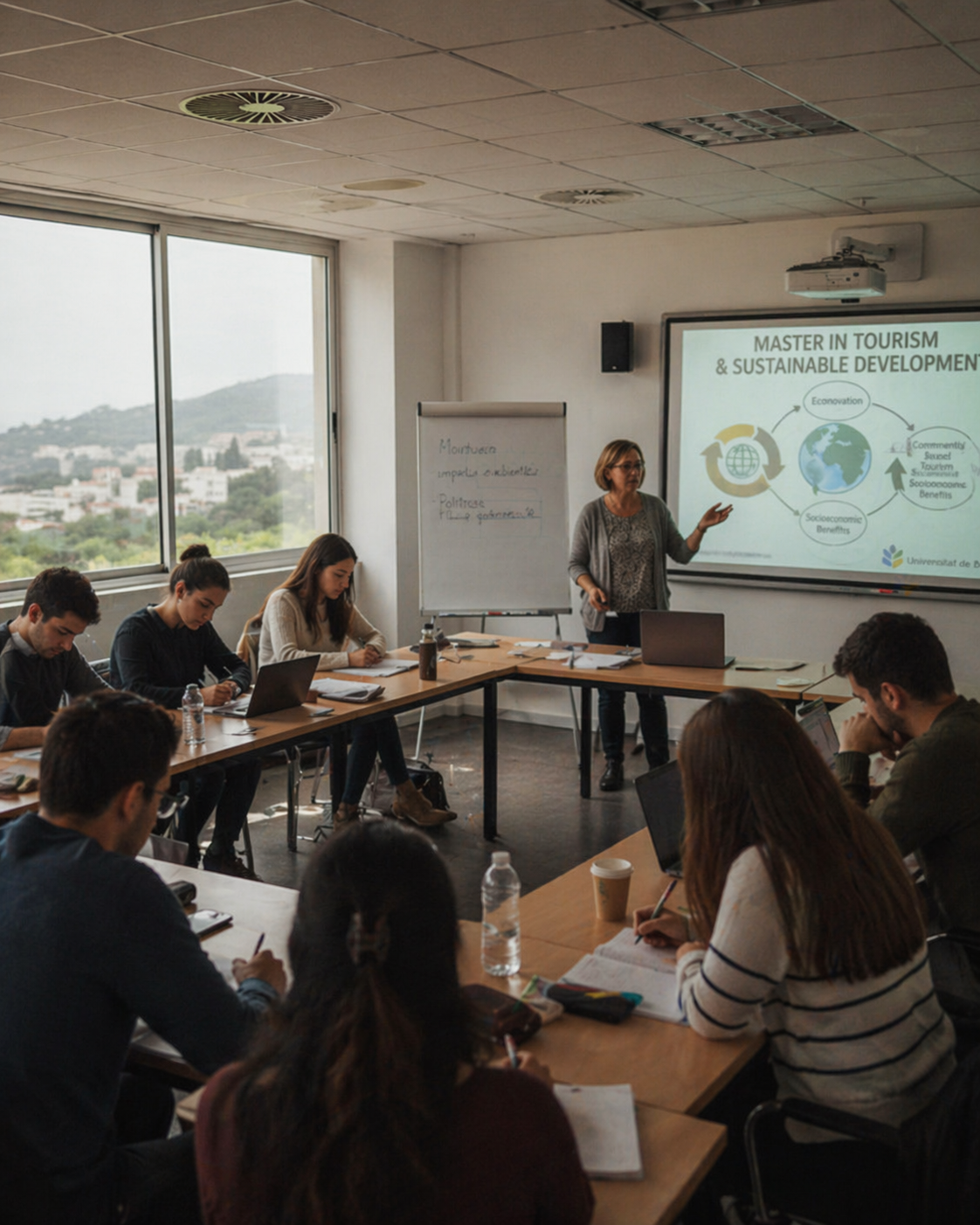
A living tourism laboratory:
the Canary Islands.
One of Europe’s most dynamic and most-studied tourism ecosystems — with real-scale destinations on your doorstep for applied research.
18–25°C
Climate year-round · Europe’s most stable
Digital Nomad Hub
Top-3 European destination for remote work
Coastal Living
Surf, hike and volcanic landscapes
Real Destinations
Applied research at full scale
Research Excellence & International Recognition
A deliberately accessible route into the world's #2 ranked institute.
TIDES is a research institute. Thanks to industry support and public backing, tuition is a fraction of comparable European masters — and 6 candidates this year will pay nothing at all.
€8,000+ comparable EU masters · You save 90%+
- 60 ECTS · full 1-year Master's program
- Access to the Neurotourism Laboratory
- Master's thesis with internationally renowned academic faculty
- Official degree from ULPGC — recognised across the EHEA
- Pathway into TIDES doctoral program
6 full-tuition scholarships
Thanks to industry support, six admitted candidates will receive the entire tuition cost covered. Selection is based on academic record, motivation and fit with the programme’s research priorities.
- Proof of pre-enrollment in the Master's program
- Updated CV & academic transcript
- Motivation letter (1 page)
Two semesters. One coherent path from foundations to applied research.
A 60-ECTS program combining five core modules in the first semester, two core modules plus two electives in the second semester, and a research-based Master’s thesis — with real tourism systems as field labs.
Sustainable tourism & environmental management
Tourism behaviour: producers & consumers
Sustainable transport systems & mobility in tourism
Tourism marketing & consumer behavior
HR management & sustainable innovation in tourism
Quantitative methods in tourism (R & Machine Learning)
Sustainable territorial development in tourism
Digital tourism (AI, blockchain, smart destinations)
Natural assets in island tourist destinations
Climate change in tourism
Neurotourism techniques (EEG, eye-tracking, biometrics)
Master's Thesis · Research-based, aligned with real tourism systems
The thesis is the program's strategic centrepiece: a substantial piece of original research developed alongside TIDES faculty, designed to be publishable, cited, and used as your entry ticket to doctoral research or senior industry roles.
A strategic academic investment with long-term impact.
Five career paths the programme is explicitly designed to open — supported by the research output, network and credentials that come with a #2-ranked institute.
Doctoral Research & Academia
Direct pathway into PhD programs. Your thesis is designed to be publishable — a foundation for a research career in tourism sustainability and strategy.
International Organisations
Global institutions shaping tourism policy and governance — UNWTO, UNESCO-linked bodies, the European Commission, and regional development agencies.
Destination Leadership
Lead strategic and sustainable transformation across destinations — DMOs, tourism boards, regional authorities, and large hospitality groups.
Government & Policy Advisory
Advise public institutions on sustainable competitiveness, climate-resilient tourism, and mobility policy — evidence-backed, not anecdotal.
Tourism Entrepreneurship
Build ventures grounded in behavioural research, AI analytics and sustainability frameworks — not guesswork. Investor-ready from day one.
Built for four specific profiles.
Graduates seeking research-led, strategic training in tourism sustainability.
Professionals ready to lead destination transformation.
Future PhD candidates and academic researchers.
Entrepreneurs building data-driven tourism ventures.
Still weighing it up?
The questions prospective students ask us most often.
TIDES is a public university institute at ULPGC. Tuition is regulated and heavily subsidised by the Spanish public system — that’s how all public-university masters work in Spain.
A university degree from any field can be suitable — the programme welcomes profiles from business, economics, environmental sciences, geography, engineering, and social sciences.
Yes, 100% of the teaching and assessments are in English. The Canary Islands have one of Europe’s largest international student and digital-nomad communities — you won’t need Spanish to live, study, or work here, though picking it up is part of the experience.
Many students do. Classes run on a structured weekly schedule that leaves space for part-time remote work. Gran Canaria is consistently ranked among Europe’s top digital-nomad destinations, with fast fibre, co-working spaces, and strong time-zone overlap with both Europe and the Americas.
Selection is based on academic record, motivation and fit with the programme’s research priorities. We recommend requesting the info pack as early as possible.
Yes — that’s one of its core design goals. The programme is explicitly structured as a research-led pathway, and graduates who demonstrate research aptitude can progress directly into the ULPGC doctoral programme in Tourism, Economics and Sustainability. Many of our PhD candidates start here.
The tourism industry needs different leaders.
Europe’s #2 ranked institute for Tourism & Hospitality is training them here — in an archipelago that is itself one of the world’s most-studied tourism ecosystems. Request your info pack and talk to admissions this week.
Desarrollado por Advanze